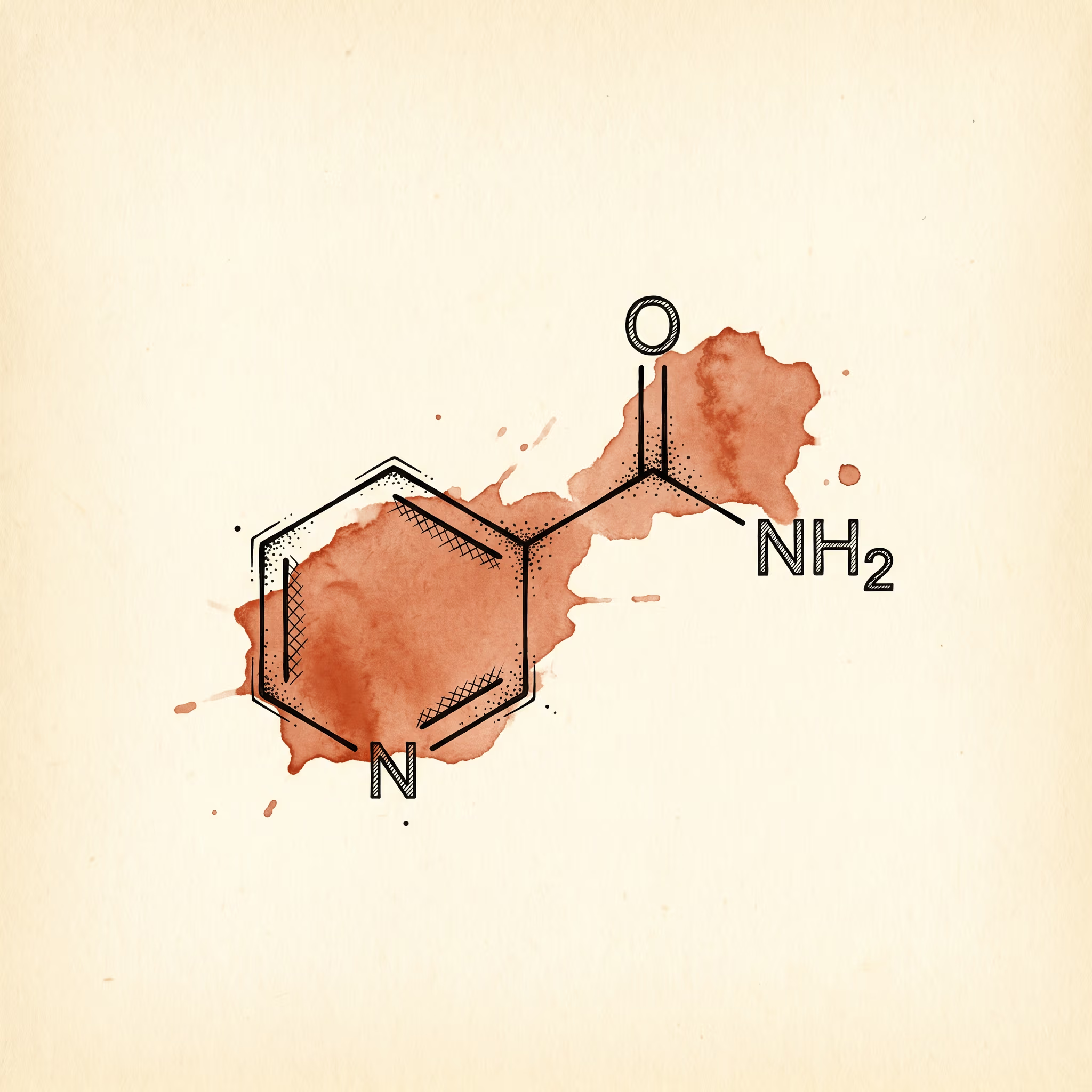
Niacinamide
Vitamin B3
Barrier-supporting, brightening, sebum-balancing
Niacinamide is the amide form of vitamin B3 (nicotinic acid). It is one of the most thoroughly studied actives in cosmetic chemistry, with consistent clinical evidence across multiple endpoints — barrier function, hyperpigmentation, redness, and sebum regulation.
Niacinamide is one of the few ingredients where the marketing and the chemistry actually agree. It works at the doses at which it is typically used. It is stable in formulation. It is well-tolerated. It plays well with most other actives — including peptides and bakuchiol.
We use 4% in the body serum and 3% in the neck concentrate. Both are within the evidence-supported range. Higher concentrations (8-10%) are sometimes used but show diminishing returns and slightly higher rates of flushing.
The science
At 2-5% concentrations, niacinamide demonstrates measurable improvements in transepidermal water loss, ceramide synthesis, and pigmentation. A 2002 *Journal of Cosmetic Science* trial (Bissett) showed significant reduction in hyperpigmentation, fine lines, and redness over 12 weeks at 5%. The mechanism is multi-pathway — it inhibits melanosome transfer, supports NAD+/NADP+ biosynthesis, and improves keratinocyte differentiation.